

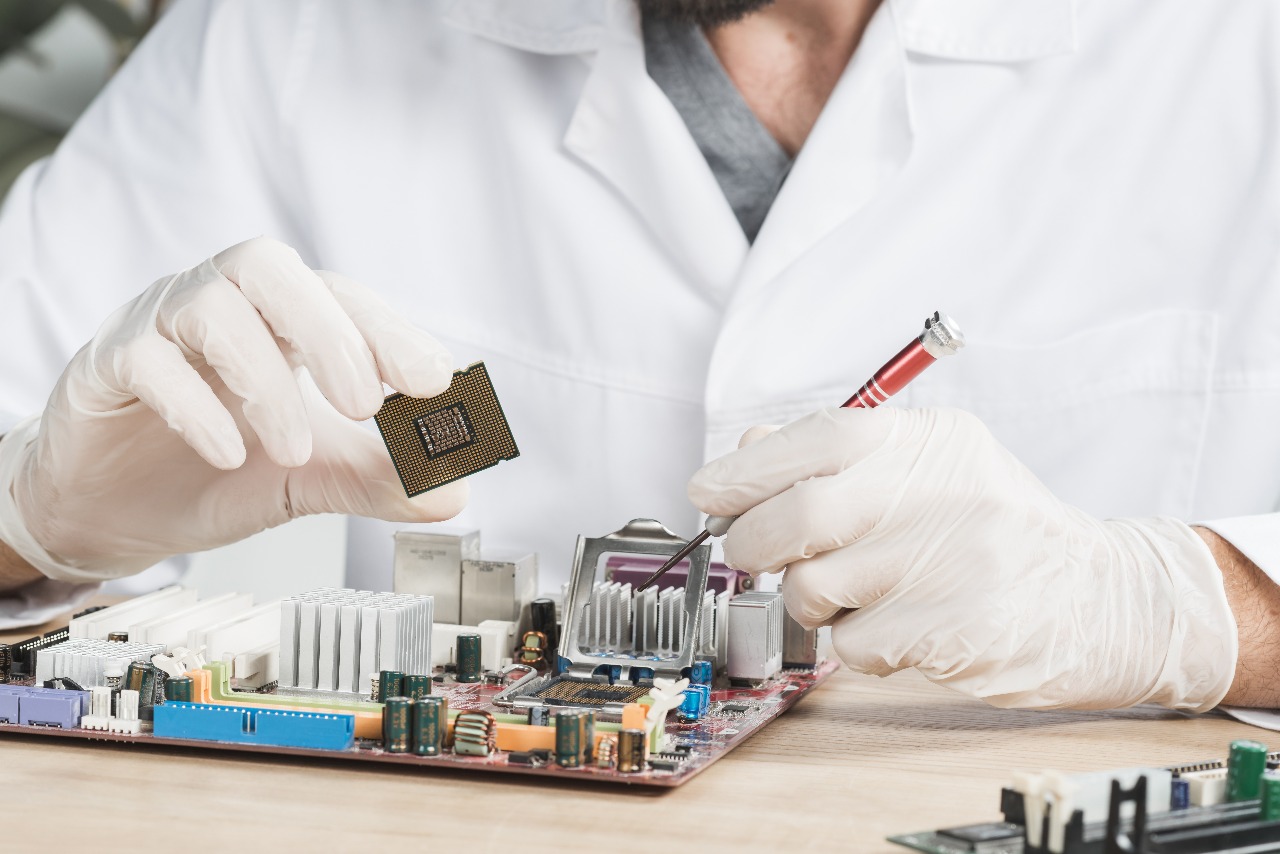
Semiconductors are the foundation of modern electronics, enabling the functionality of devices ranging from smartphones to electric vehicles. As the global demand for advanced technologies grows, the semiconductor industry is experiencing rapid evolution, with significant developments in India and worldwide.
Understanding Semiconductors
Semiconductors are materials with electrical conductivity between that of conductors and insulators. This unique property allows them to control electrical currents, making them essential for electronic components.
Types of Semiconductors
Intrinsic Semiconductors: Pure forms of semiconductor materials, such as silicon and germanium, without any significant impurities.
Extrinsic Semiconductors: Doped semiconductors where impurities are added to modify electrical properties.
They are classified into
N-type: Doping with elements that have more electrons than the semiconductor, providing extra electrons.
P-type: Doping with elements that have fewer electrons, creating holes or positive charge carriers.
Applications of Semiconductors Today
Semiconductors are integral to various sectors
- Consumer Electronics: Smartphones, laptops, and home appliances rely on semiconductor chips for processing and memory functions.
- Automotive Industry: Modern vehicles use semiconductors for engine control units, infotainment systems, and advanced driver-assistance systems (ADAS).
- Healthcare: Medical devices, such as MRI machines and pacemakers, utilize semiconductors for accurate diagnostics and monitoring.
- Telecommunications: Semiconductors enable high-speed data transmission in networking equipment and mobile communication devices.
- Industrial Automation: Manufacturing processes use semiconductor-based sensors and controllers for precision and efficiency.
Trending Semiconductor Technologies
1. Advanced Packaging Techniques
Innovations like 2.5D and 3D integrated circuits (ICs), system-in-package (SiP), and chiplet architectures are enhancing performance and reducing the size of electronic devices.
2. High-NA EUV Lithography
Companies like Intel are exploring high numerical aperture extreme ultraviolet (High-NA EUV) lithography to achieve finer semiconductor patterns.
3. Indium Selenide (InSe) Materials
Research into indium selenides suggests potential for low-power, high-speed computing applications, offering advantages over traditional silicon-based semiconductors.
4. Photonics and Neuromorphic Computing
Integrating photonics into computing systems is paving the way for neuromorphic computing, which mimics neural networks for faster and more efficient data processing.
Global Semiconductor Landscape
United States
The U.S. is investing in domestic semiconductor manufacturing to reduce dependency on foreign suppliers, with initiatives like the CHIPS and Science Act supporting this effort.
South Korea
South Korea plans to invest approximately $470 billion over the next two decades to establish the world’s largest semiconductor cluster, aiming for greater self-sufficiency.
Europe
TSMC is setting up a chip design center in Munich, Germany, to support the EU’s goal of increasing semiconductor production within the region.
India’s Semiconductor Initiatives
India is making significant strides to become a global semiconductor hub
- Dholera, Gujarat: Tata Electronics, in partnership with Taiwan’s PSMC, is establishing a semiconductor fabrication facility with an investment of ₹91,000 crore.
- Morigaon, Assam: Tata Semiconductor Assembly and Test Pvt Ltd (TSAT) is setting up an ATMP unit expected to produce 48 million chips daily, creating thousands of jobs.
- Sanand, Gujarat: CG Power, along with Renesas Electronics and Stars Microelectronics, is developing a specialized chip manufacturing unit.
- Policy Support: States like Uttar Pradesh and Maharashtra have introduced semiconductor policies to attract investments and develop infrastructure.
Challenges in the Semiconductor Industry
1. Supply Chain Disruptions
Global events have highlighted vulnerabilities in semiconductor supply chains, emphasizing the need for diversification and localized manufacturing.
2. Talent Shortage
The industry faces a shortage of skilled professionals. India is projected to need an additional 250,000 to 300,000 semiconductor experts by 2027.
3. Technological Complexity
As devices become more advanced, the complexity of semiconductor design and manufacturing increases, requiring significant R&D investments.
Conclusion
Semiconductors are at the heart of technological advancement, with emerging trends promising to reshape industries and economies. India’s proactive approach, combined with global collaborations and investments, positions it to play a pivotal role in the future of semiconductor technology. Addressing challenges like supply chain resilience and talent development will be crucial to sustaining this growth trajectory.
Reference
- Advanced packaging (semiconductors) – Wikipedia
- TSMC still evaluating ASML’s ‘High-NA’ as Intel eyes future use | Reuters
- [2503.12708] Indium selenides for next-generation low-power computing devices
- Semiconductor industry in South Korea – Wikipedia
- TSMC to Set Up Chip Design Hub in Germany – WSJ
- 2024 landmark year for semiconductor industry in India
- India’s Semiconductor Sector: Three New Plants Get Approved
- Semiconductor Industry Mega Trends 2024 by Abhilasha ESSCI
- Hon’ble PM Narendra Modi Inaugurates SEMICON® India 2024, Signaling India’s Rise as a Global Semiconductor Hub | SEMI