


In today’s rapidly evolving regulatory and technological environment, artificial intelligence (AI) is no longer a futuristic concept, it’s a practical solution reshaping how governments and organizations govern, audit, and ensure compliance.
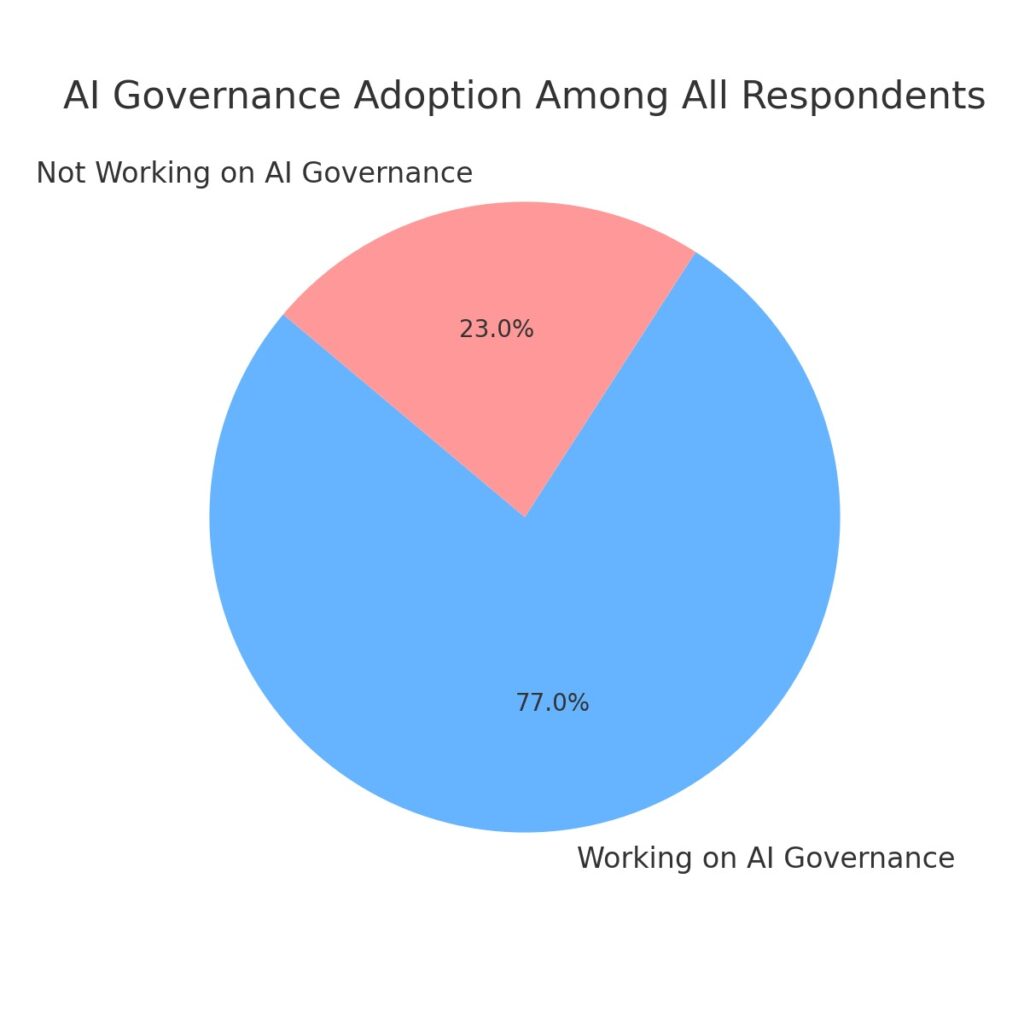
The recent report, published by the IAPP and Credo AIA shows that significantly, 30% of firms not yet adopting AI acknowledged working on AI governance, while 77% are currently working on it, with that number rising to almost 90% for those already utilizing AI.
The regulatory frameworks grow in complexity, and data volumes become unmanageable by human effort alone, AI offers a scalable and intelligent way to uphold accountability, streamline operations, and ensure ethical conduct.
Governance Reinvented Through AI
Governance, once bound by bureaucratic processes, is undergoing a digital overhaul with AI at the helm
- Automated Policy Monitoring: AI tools can parse through legislative changes and instantly update internal governance models, helping institutions remain aligned with regulatory standards without manual intervention.
- Smart Grievance Redressal: Chatbots and intelligent assistants improve citizen engagement by automating complaint resolution, monitoring public sentiment, and ensuring timely responses.
- Data-Driven Decision-Making: Machine learning algorithms analyze historical and real-time data to recommend policies, allocate resources, and forecast outcomes with greater precision.
AI-Powered Compliance: From Reactive to Proactive
Compliance is traditionally viewed as a reactive activity responding to audits, investigations, or changes in laws.
- Real-Time Monitoring: AI continuously scans operational data, flagging suspicious transactions, unethical behaviors, or potential compliance breaches in real time.
- Regulatory Intelligence: Natural Language Processing (NLP) tools digest regulatory texts across jurisdictions, highlighting relevant updates and translating legal jargon into actionable insights.
- Document Validation and Reporting: Automated systems ensure all reports, contracts, and documentation meet legal and industry standards, saving time, reducing error, and improving audit readiness.
AI Life Cycle Considerations
Effective AI governance requires oversight across the entire AI lifecycle
- Planning: Defining objectives and compliance requirements.
- Design: Data collection and quality assessment.
- Development: Model training and validation.
- Deployment: Monitoring performance and mitigating risks.
Industry Specific Applications
Financial Services: AI assists in real-time fraud detection, customer due diligence, and regulatory reporting reducing manual workloads and improving precision.
Healthcare & Life Sciences: Ensures patient data privacy under frameworks like HIPAA, manages consent protocols, and tracks compliance with medical trial regulations.
Government & Public Sector: AI enables digital identity verification, tax compliance monitoring, and smart infrastructure governance while enhancing service delivery transparency.
Manufacturing & Supply Chain: Tracks ESG goals, ensures compliance with labor and safety laws, and supports green certification processes.
Challenges in AI-Driven Governance and Compliance
Bias in Algorithms: If AI models are trained on skewed or incomplete data, their outputs may perpetuate discrimination, especially in hiring or law enforcement.
Explainability & Trust: Many AI systems operate as “black boxes,” making it difficult to trace or justify decisions. This undermines trust and transparency.
Data Privacy Risks: The constant monitoring and data collection inherent in AI systems raise concerns around privacy, especially in sensitive sectors like healthcare and finance.
Over-Reliance on Automation: While AI improves efficiency, human oversight remains crucial to ensure decisions reflect ethical, cultural, and contextual nuances.
Toward a Transparent, Accountable AI Future
The path forward lies in human-AI collaboration. By blending AI’s analytical power with human values, organizations can create systems that are not only efficient but also just and accountable.
Key strategies
- Developing responsible AI governance frameworks with clear accountability lines.
- Investing in AI literacy across teams to ensure inclusive and informed use.
- Fostering interoperability and cross-sector collaboration to build robust, compliant digital ecosystems.
Conclusion
As we enter a world characterized by smart systems and accelerated digitalization, AI presents itself not only as a technology, but also a partner in reshaping governance. Its ability to predict regulatory change, identify anomalies, and facilitate real-time compliance makes AI the foundation of the next generation of institutional integrity.
When informed by ethical principles and human-centered values, AI does not merely enable governance, it revolutionizes it. It builds a future in which openness is systemic, decision-making is informed by data, and citizens’ trust is obtained not through promises, but through accuracy, responsibility, and creativity. In this future, AI-driven governance is not merely intelligent, it is inherently more just, more agile, and more resilient.
Reference
- AI Governance profession Report 2025
- How AI is Driving Sustainability Efforts in 2024
- Compliance: Global Survey 2025 | PwC Ukraine
- The Evolving Framework of Data Governance: A Global Perspective